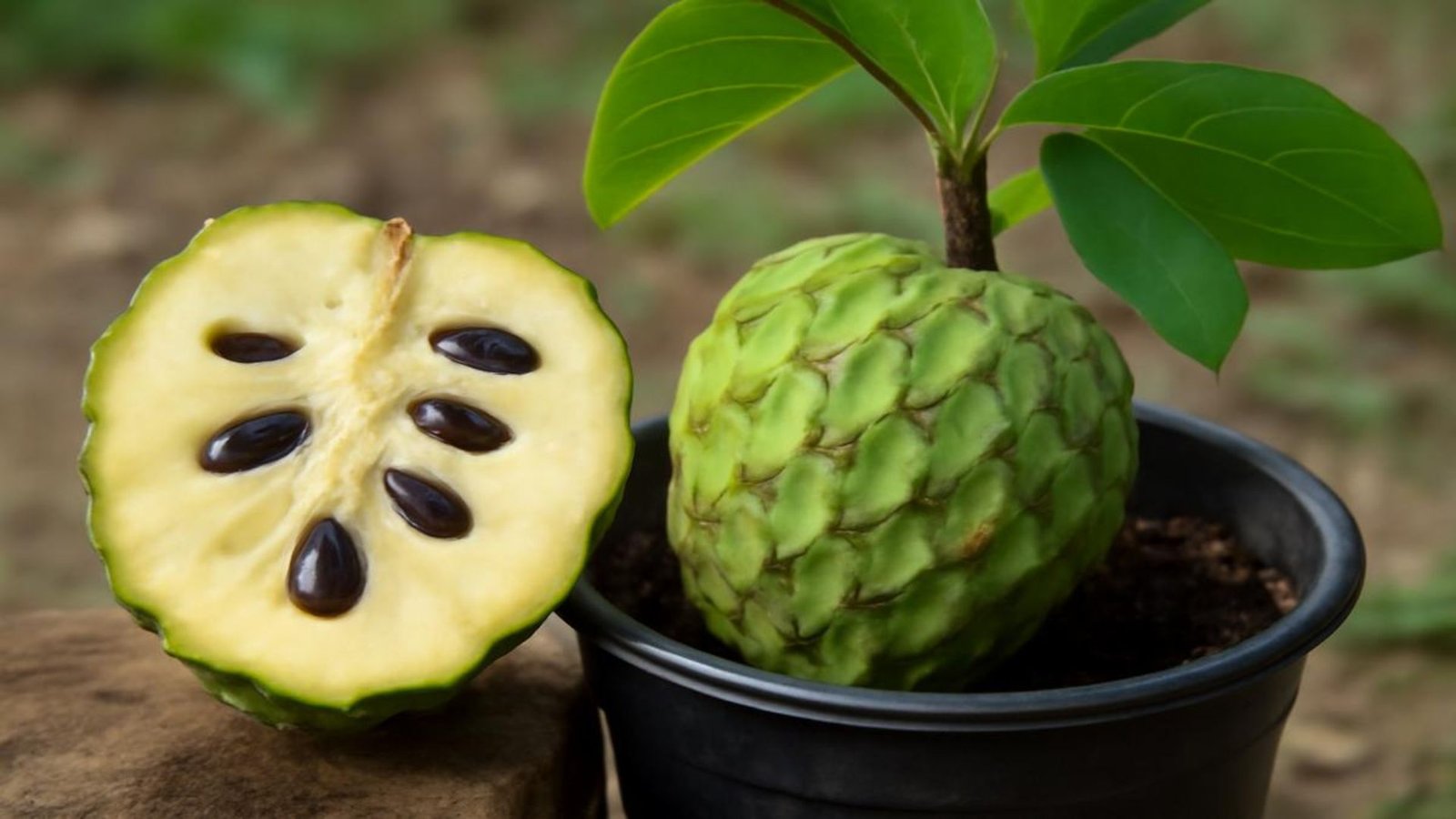
Imagine biting into a fruit that’s creamy like custard, with flavors of banana, pineapple, and vanilla—all from a tree you grew on your patio. Cherimoya, often called the “custard apple,” delivers that luxurious taste, but it’s rare and pricey in stores. The good news? You can successfully grow cherimoya in containers, even in smaller spaces, yielding that irresistible custard-like flesh right at home.
This proven container method lets hobbyist gardeners enjoy homegrown tropical delight without needing a big yard. Keep reading to discover how easy it can be!
What Is Cherimoya?
Cherimoya (Annona cherimola) is a heart-shaped tropical fruit with green, scaly skin and snowy-white, creamy flesh dotted with black seeds. Its texture is soft and custard-like, earning nicknames like “custard apple.” The flavor blends sweet tropical notes—think pineapple, banana, and a hint of vanilla. Native to subtropical regions, it’s a treat that’s hard to find fresh unless you grow it yourself.
History and Origin of Cherimoya
Cherimoya originates from the highland valleys of the Andes in Ecuador, Peru, and Colombia, thriving at elevations where nights are cool. Ancient Incas prized it, and Spanish explorers spread it worldwide in the 16th century. Today, Spain leads production with protected varieties like ‘Fino de Jete,’ but home growers in mild climates like coastal California keep the tradition alive.
Why Grow Cherimoya Today?
In our fast-paced world, growing cherimoya in containers brings exotic luxury to everyday gardening. It’s perfect for patios, balconies, or small yards— no huge orchard needed. Homegrown fruits taste fresher and sweeter than store-bought, plus the tree’s lush leaves add tropical vibe. With climate challenges, container growing lets you move the plant for protection, making this “king of fruits” (as Mark Twain called it) accessible to more hobbyists.
The Proven Container Method: Step-by-Step Guide
Container growing cherimoya keeps the tree manageable (10-15 feet tall) and portable. Many say it’s tricky due to the taproot, but with the right approach, grafted varieties fruit beautifully in pots.
- Choose a Variety and Plant: Opt for grafted types like ‘Fino de Jete’ or ‘Pierce’ for earlier fruiting and compactness.
- Pot and Soil: Use a deep 15-25 gallon container with drainage holes. Fill with well-draining mix: potting soil, perlite, and organic compost.
- Location and Watering: Full sun (6-8 hours), consistent moisture during growth (every few days), but drier in winter.
- Pollination: Hand-pollinate with a brush—collect pollen afternoon, apply morning—for best set.
- Pruning and Care: Prune to keep low branches for easy harvesting; fertilize balanced during season.
| Popular Cherimoya Varieties for Containers | Skin Type | Flavor Notes | Fruit Size | Suitability |
|---|---|---|---|---|
| Fino de Jete | Smooth | Rich, sweet | Medium | Excellent |
| Pierce | Bumpy | Tangy-sweet | Large | Good |
| El Bumpo | Smooth | Creamy | Medium | Very Good |
| White | Bumpy | Mild | Very Large | Fair |
Notable Facts About Cherimoya
- Mark Twain called it “the most delicious fruit known to men.”
- Fruits weigh 0.5-6 lbs, ripening in 5-8 months.
- Seeds are toxic—never crush or eat them.
- Spain’s Granada region produces most globally, with PDO status for some.
| Cherimoya vs. Related Fruits | Flavor Profile | Tree Size | Container Ease | Pollination Needed |
|---|---|---|---|---|
| Cherimoya | Custard-like, complex | 15-30 ft | Moderate | Hand often |
| Atemoya (hybrid) | Sweeter, pineapple | Smaller | Better | Sometimes |
| Sugar Apple | Very sweet, gritty | Compact | Good | Natural |
| Soursop | Tangy, fibrous | Large | Poor | Natural |
Expert Tips for Success
- Start with grafted plants—they fruit in 2-4 years vs. 5-7 from seed.
- Train branches low and horizontal for easy hand pollination.
- Protect from frost below 25°F; move pots indoors if needed.
- Thin fruits to 1-2 per cluster for larger, better custard-like flesh.
- Watch for root rot—ensure excellent drainage.
Frequently Asked Questions
Can I really grow cherimoya in a container?
Yes! Use large pots, grafted varieties, and prune regularly—it thrives for hobbyists.
How long until fruit?
Grafted trees: 2-4 years. Hand pollination boosts yields.
Is cherimoya hard to pollinate?
Flowers need help in many areas—use a soft brush for morning transfers.
What zones work best?
USDA 9-11; coastal mild climates ideal.
Are seeds poisonous?
Yes, avoid ingesting; flesh is safe and nutritious.
Conclusion
Growing cherimoya in containers unlocks the joy of harvesting your own custard-like treasures—creamy, flavorful fruits that feel like a tropical vacation. This proven method makes it achievable for any gardening enthusiast, rewarding patience with unbeatable taste. Start with a grafted tree today, follow these steps, and soon you’ll savor homegrown perfection. Share your progress in the comments or with friends—happy gardening!